Cleanroom and data recovery lab

Bot WhiteRoom®

We care so much about your data that we built a room just for it.

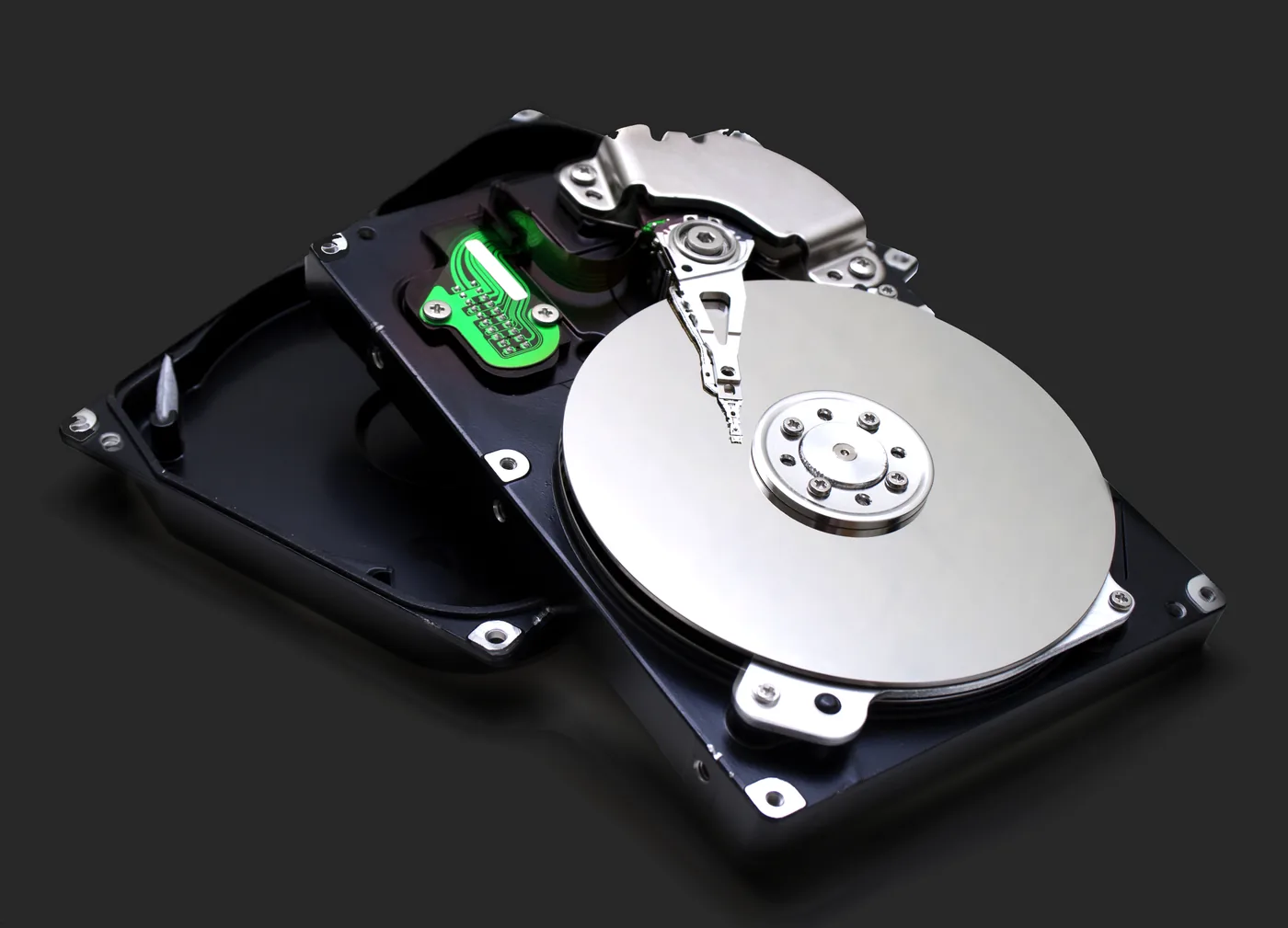
Open hard drive, with the platters and the head arm visible, on a dark background
Inside a hard driveThe mirrored platters hold the data; the arm above them is what reads it.

ISO 5 cleanroom for data recovery

Opening a hard drive outside a cleanroom is like performing surgery in the middle of the street.

In the Bot WhiteRoom®, the air is filtered and controlled so that dust cannot reach the platters of hard drives while we replace read/write heads and motors, with microscopy and precision tools.

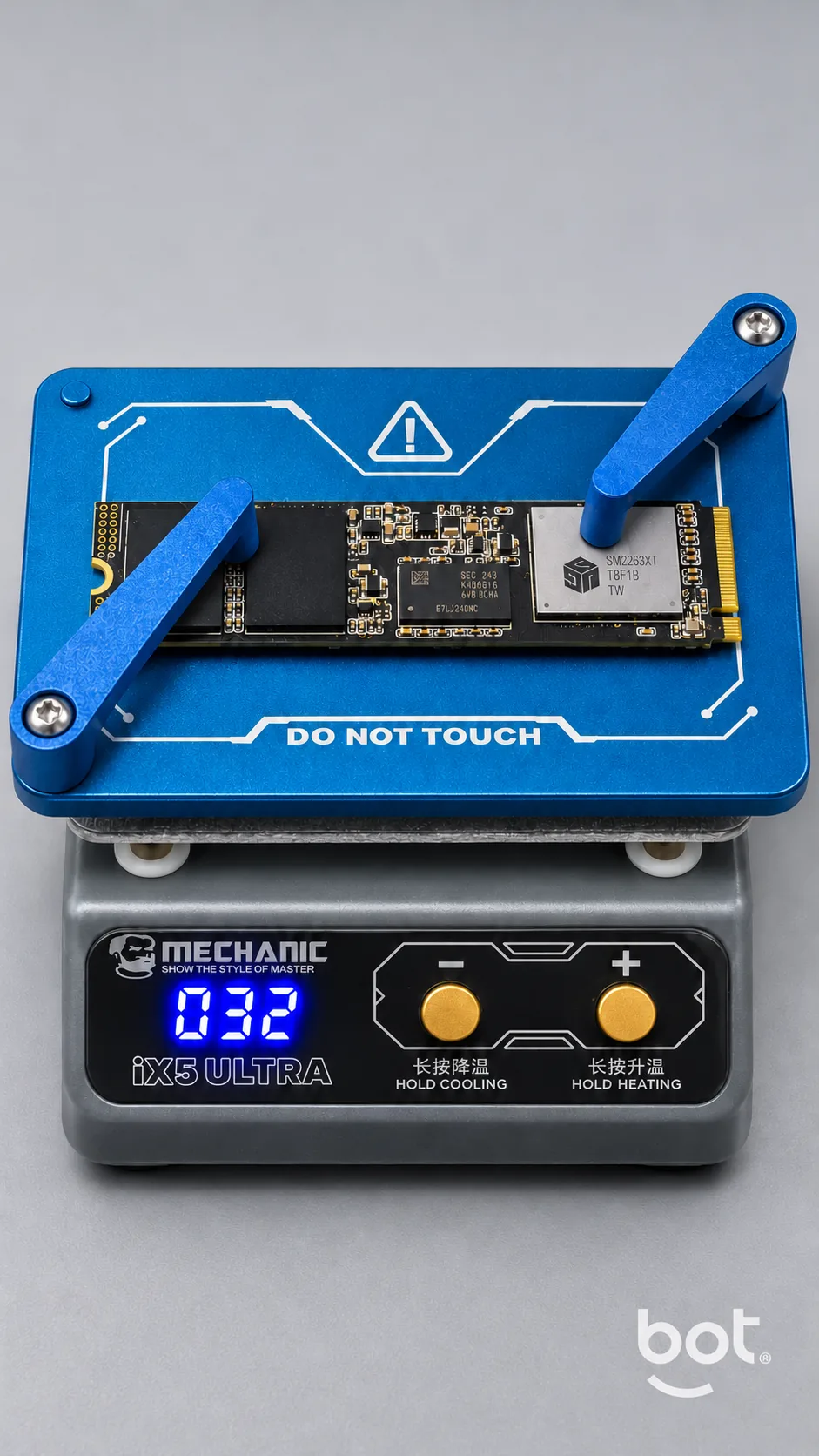
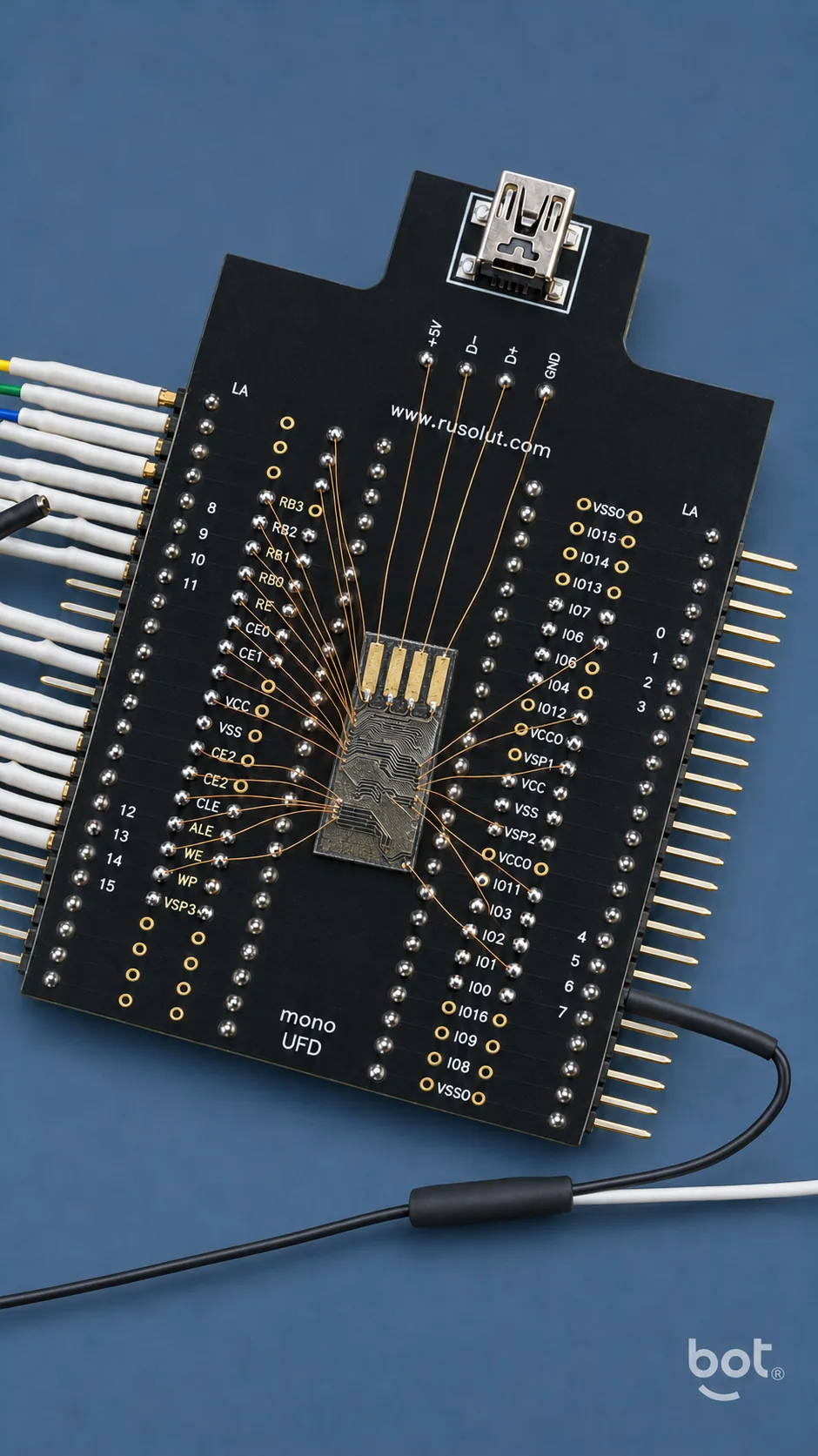
Inside it, each type of recovery has its own lab: mechanics and mechatronics for hard drives, and the Flash Lab for SSDs, USB flash drives and memory cards.

Whenever the condition of the drive allows, the work starts with an exact copy: the recovery is carried out on that copy, and the original is preserved. With physical damage, the drive may first need work so that it can be read again.

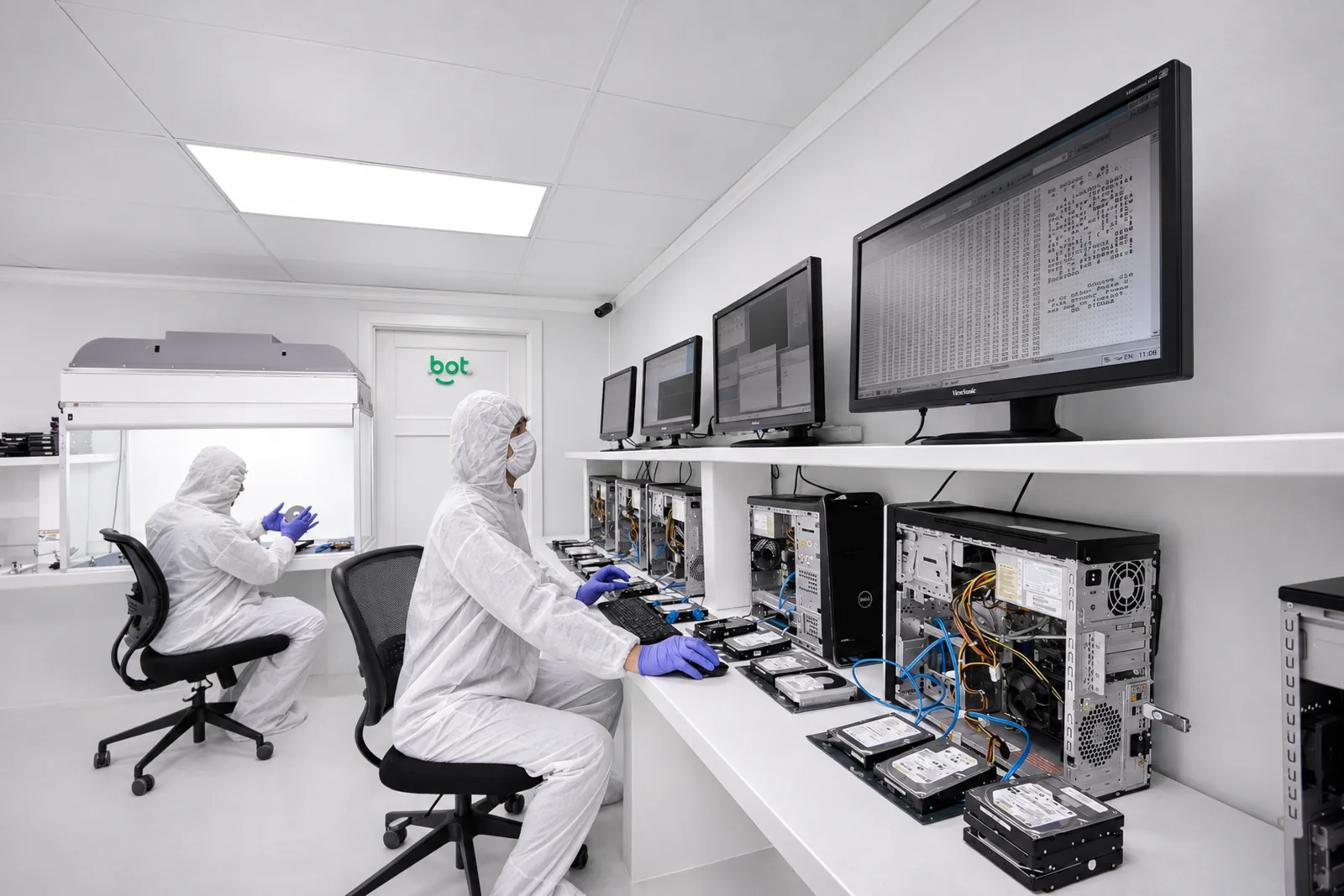
Two Bot technicians in cleanroom suits: one at the monitors with hard drives being read, the other at the laminar flow bench
Bot WhiteRoom®On the left, the laminar flow bench, where drives are opened; on the right, the computers that read and copy the data.

PC-3000 and ACE Lab

PC-3000, with direct support from the people who develop it.

As a long-standing commercial partner of ACE Lab, Bot uses constantly updated PC-3000 platforms and has direct technical support from the engineers who develop the technology.

  • Firmware
  • SMR drives
  • Encryption

Inside the Bot WhiteRoom®

  • Inside the laminar flow hoodFiltered air flows down over the bench while the hard drive is open. Gloves, gown and cap keep the technician from becoming the source of dust.
  • Read/write head replacementWith the hard drive open, the technician replaces the parts that read the data, without letting dust reach the platters.
  • Precision toolsTiny screwdrivers, for opening and assembling drives without forcing any part.
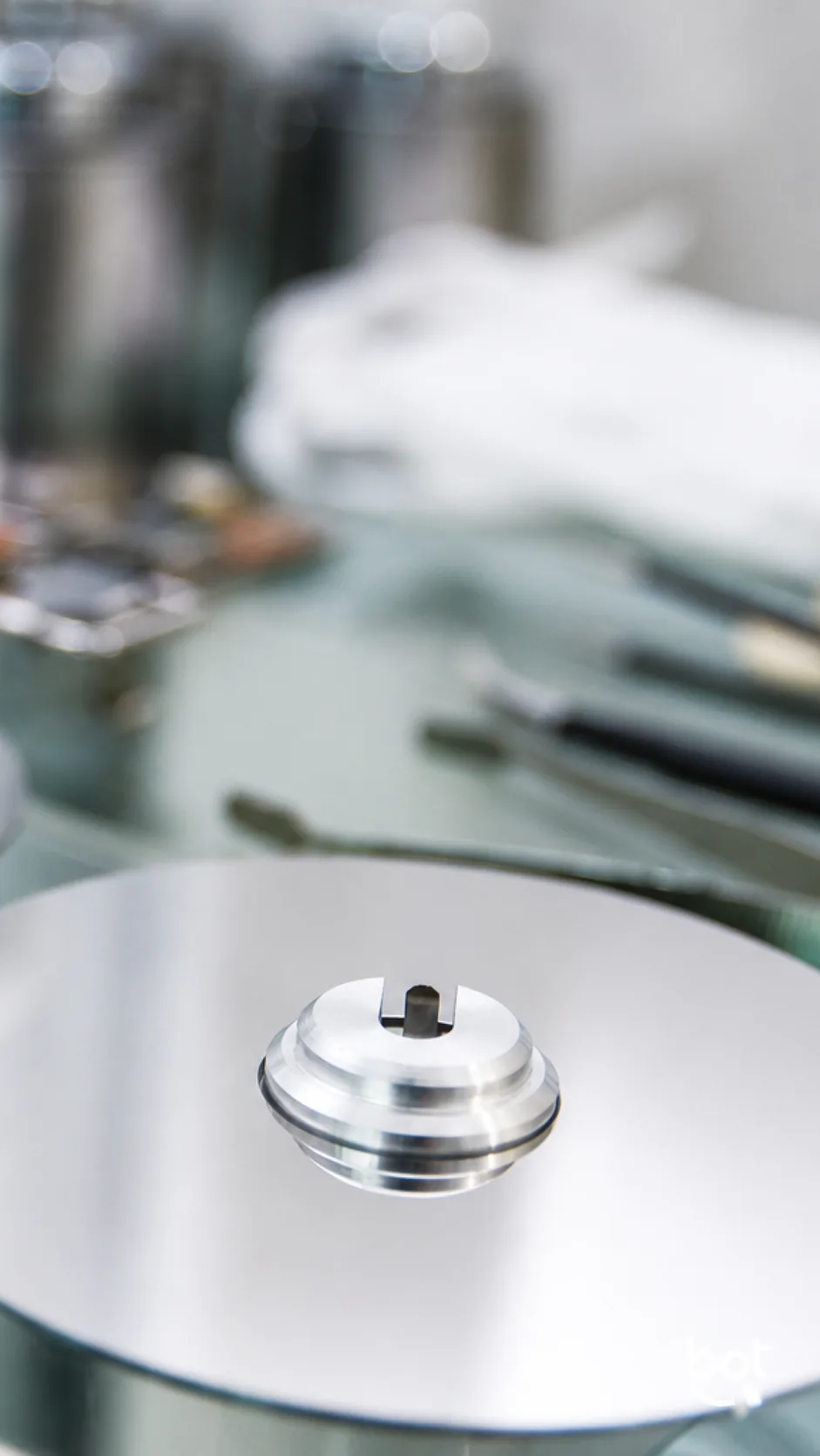
  • Hard drive plattersThe data is recorded on these disks. An invisible scratch is enough to lose it.
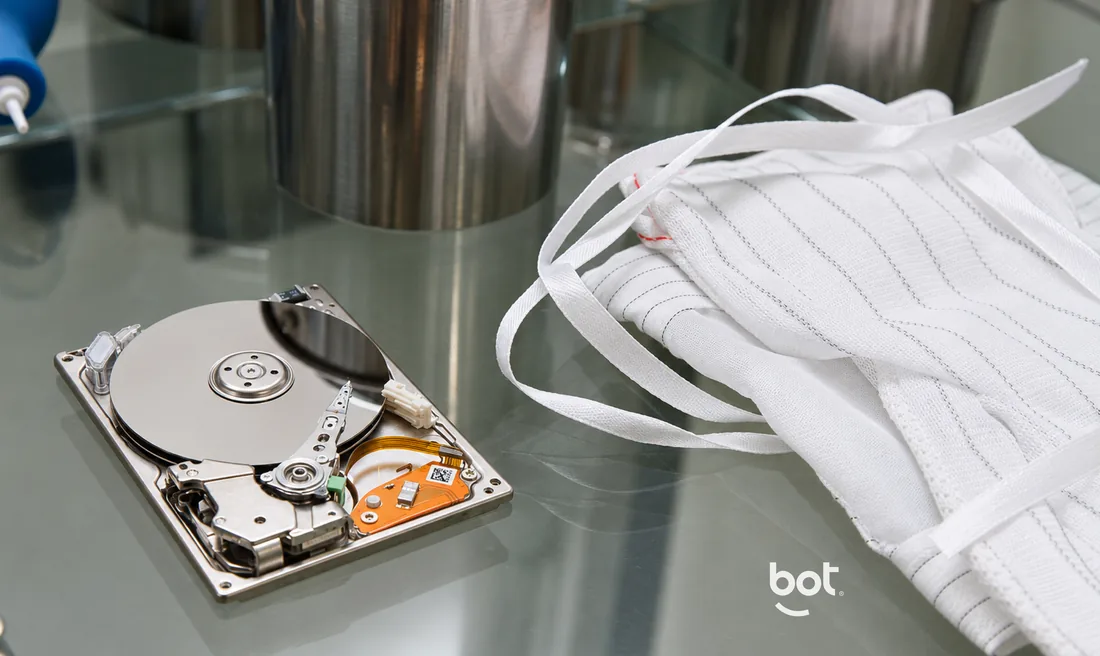
  • Open laptop hard driveA small drive, open on the glass bench, next to the protective equipment.

The Bot WhiteRoom® labs

In Bot's labs, there are two main areas: mechanics and mechatronics, and electronics and Flash.

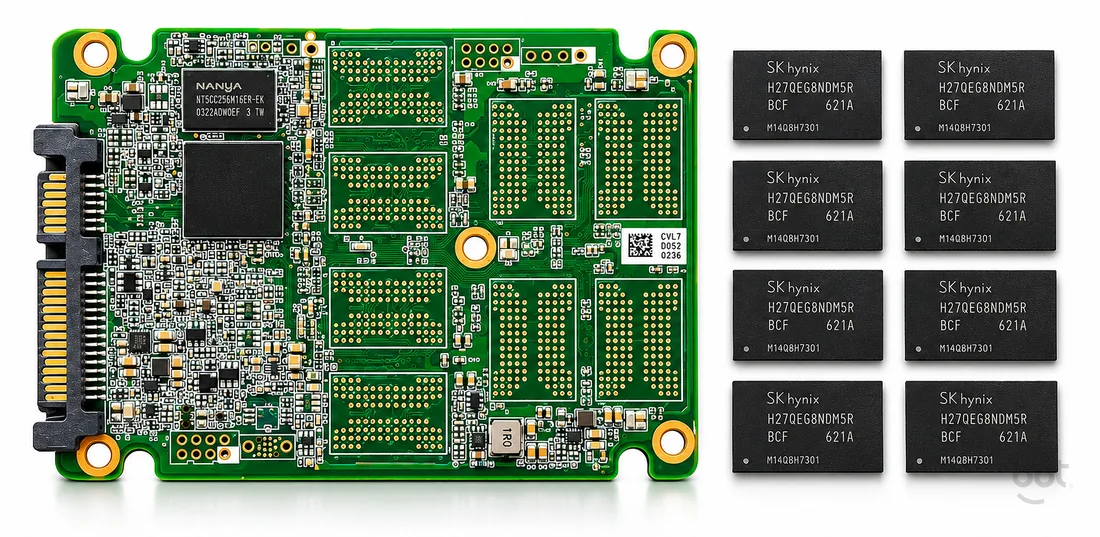
That is where most recoveries are concentrated: hard drives, opened in the cleanroom (read/write heads, platters, motor and board), and flash memory, read directly from the chips (pinout, temperature and microscopy for electronics).

Mechanics and mechatronics lab: hard drives

Your data is on the platters. Everything else can be replaced.

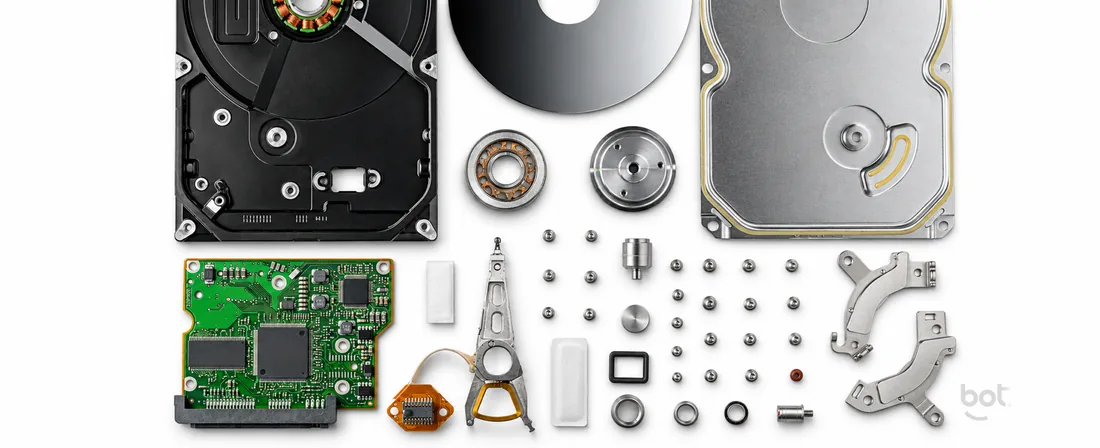
Platters, motor, board and the arm with the read/write heads: that is what is inside a hard drive. In the Bot WhiteRoom®, we replace the part that failed so the platters, where your data is, can be read again.

The parts of a disassembled hard drive, side by side: casing, platter, motor, PCB, head arm and screws
  1. Platters: this is where the data is stored
  2. Arm with the read/write heads
  3. Motor
  4. Logic board
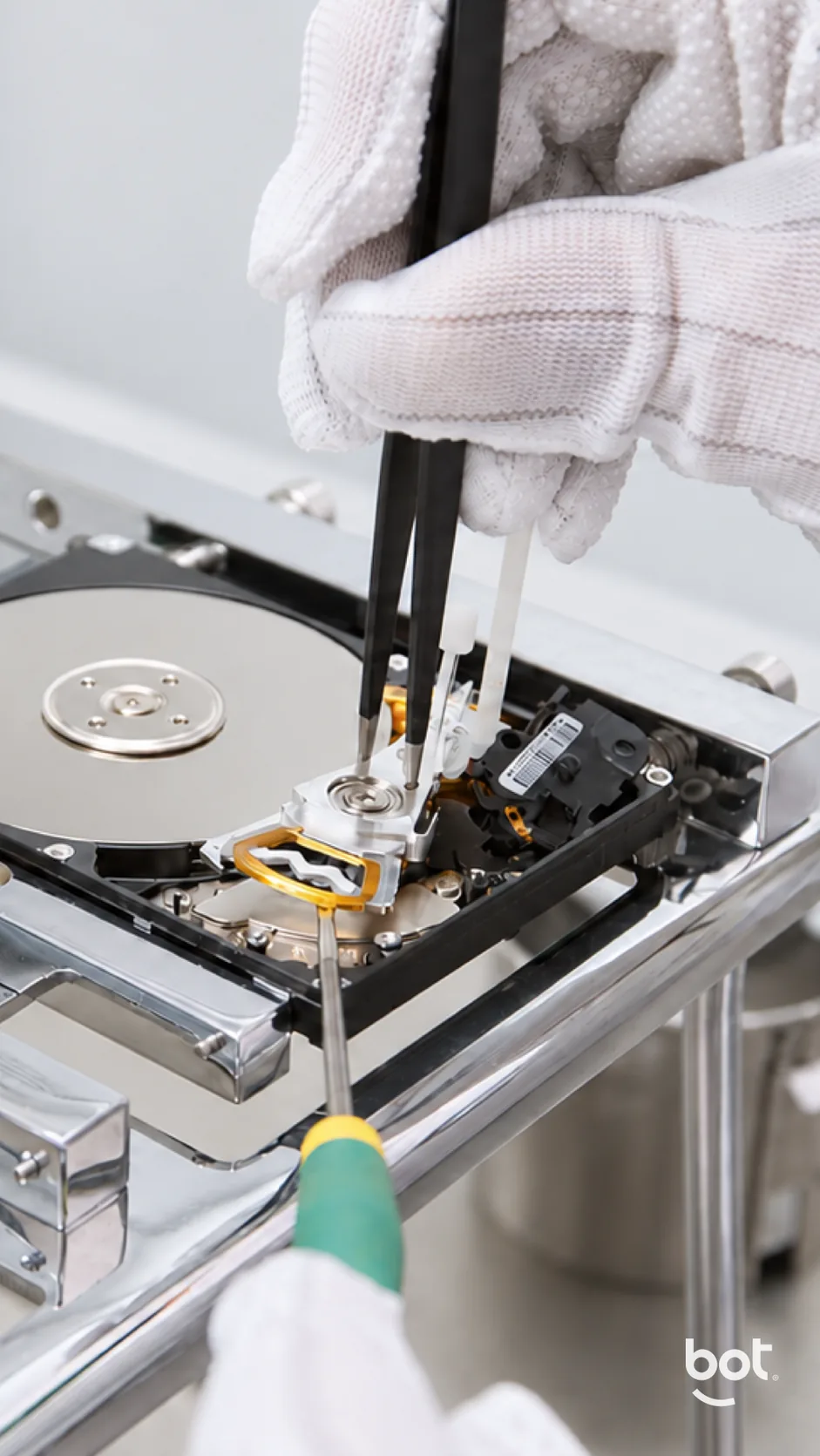
Hands in cleanroom gloves holding the tool that replaces the read/write heads of an open hard drive held in a steel stand

Case 01Mechanics and mechatronics

Hard drive · damaged read/write heads

Read/write head replacement

With the hard drive open in the laminar flow hood, the technician secures the arm with the tool and replaces the damaged read/write heads with ones compatible with the drive model, without anything touching the surface of the platters. With the new heads, the drive can be read and copied again.

  1. Precision tool
  2. Arm with the read/write heads
  3. Platter, where the data is stored
Hard drive platter removed and laid on a glass bench, with the motor hub in the center
Open laptop hard drive on a glass bench: the platter visible, with the head arm above it

Case 02Mechanics and mechatronics

Hard drive · scratched platters

Platter surface analysis

Before any reading, the surface of the platters is examined for scratches, head contact marks and dirt. This examination shows how far the damage extends and whether reading is safe, and it determines where to start in order to save as much data as possible.

  1. Platter surface, where scratches appear
  2. Motor hub, which holds the platters
  • Read/write head replacement
  • Platter surface analysis
  • Motor replacement
  • Logic board and firmware
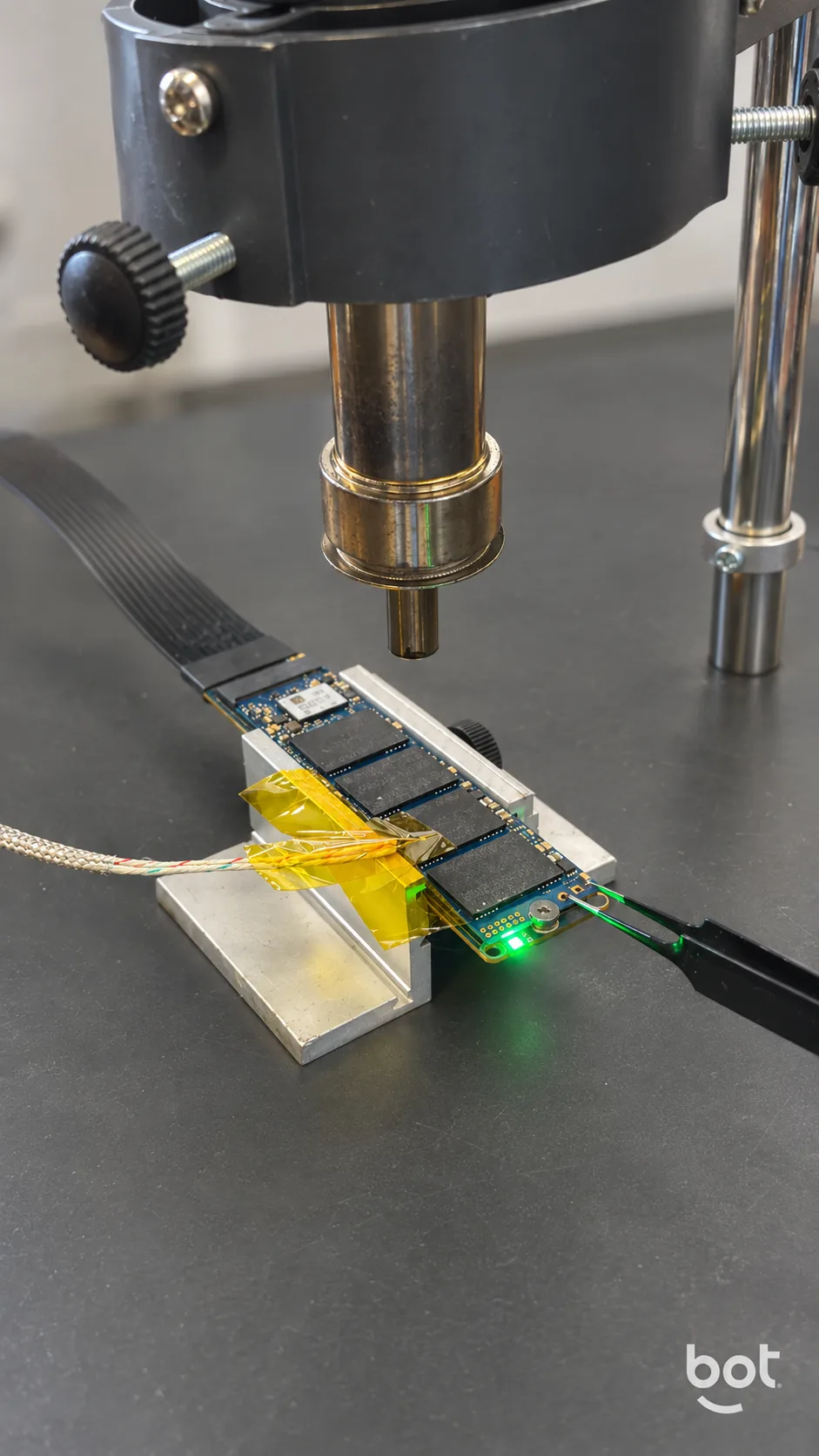
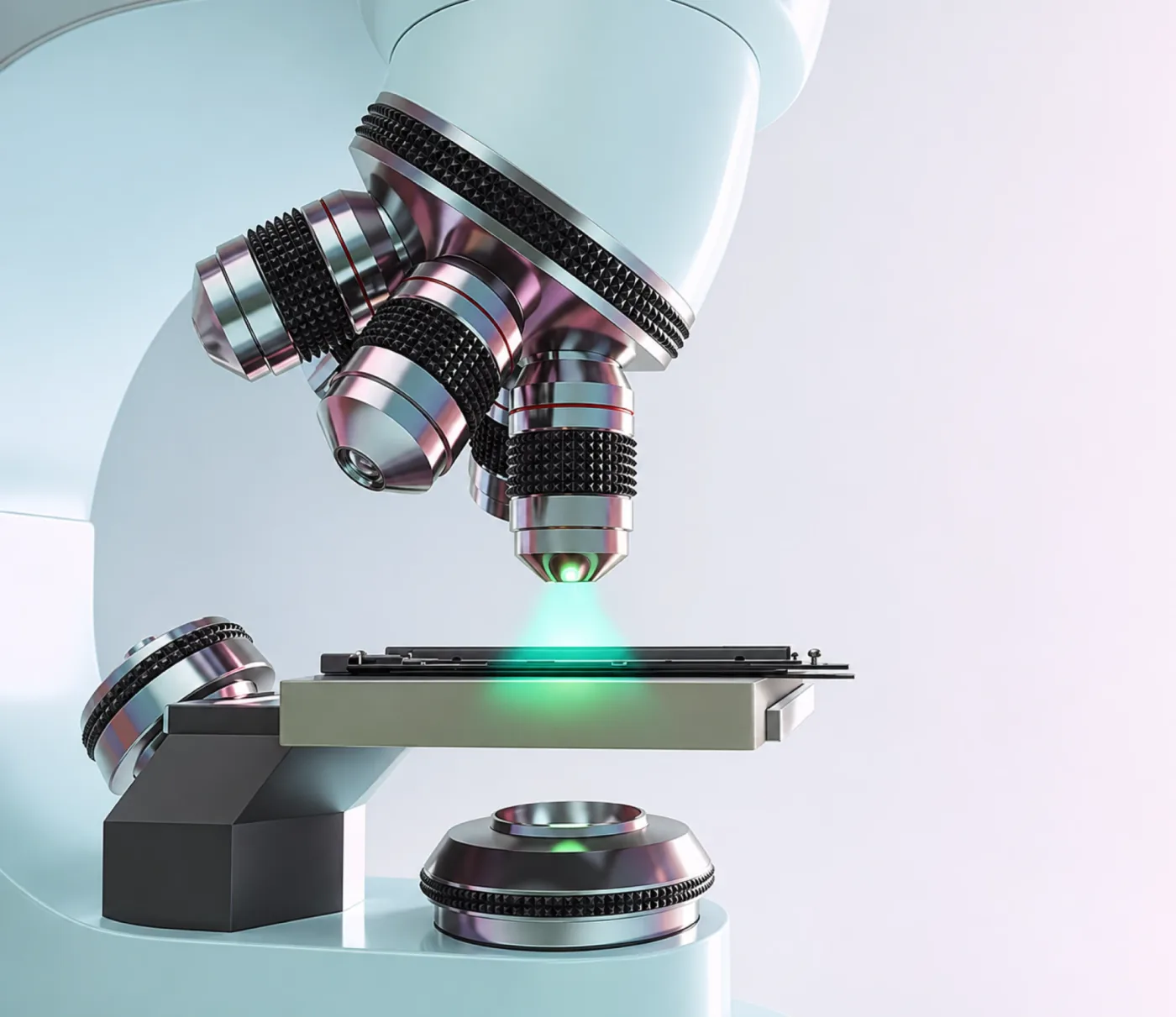
Illustration of a microscope with the objective over a circuit board, lit by a green light
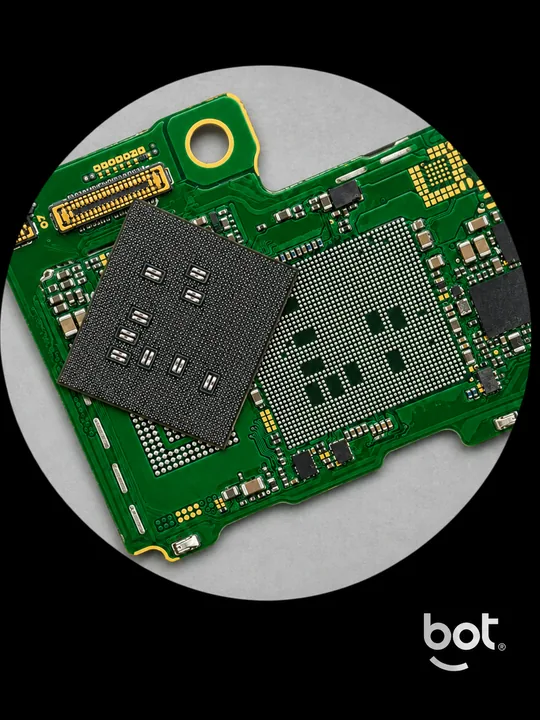
Microscope view of a board from which a BGA chip has been removed, with the solder balls exposed

Microscopy in the electronics lab

What the eye can't see, the microscope reveals.

High-precision microscopes with controlled lighting reveal scratches on platters and defects on boards that are invisible to the naked eye. It is under the microscope that the electronics lab makes the delicate adjustments: examining a logic board, adjusting a component, soldering wires to the contacts of a chip.

This examination guides each stage of the recovery, before any part is replaced.

Frequently asked questions about the cleanroom

Straight answers, before you send anything.

Can opening the drive at home work?

No. A single speck of dust can scratch the internal platters and destroy the data irreversibly. Only a Class 100 cleanroom, such as the Bot WhiteRoom®, ensures that the device is opened safely. If the hard drive is making noises or is not recognized, turn it off and do not keep trying.

Why do so few companies have cleanrooms for data recovery?

Installing and maintaining a Class 100 cleanroom requires major investment in technology, special filters and constant air quality monitoring. That is why only specialized labs, such as Bot®, have this kind of facility, dedicated exclusively to data recovery and used every time a drive has to be opened.

Does the WhiteRoom® guarantee 100% data recovery success?

There is no absolute guarantee in any recovery process, because the results depend on the extent of the damage to the device. However, the WhiteRoom® provides the safest possible environment, considerably increasing the chances of success. The diagnosis assesses the technical feasibility of your case before any intervention.

What makes the Bot WhiteRoom® different from other cleanrooms?

Beyond the Class 100 standard, WhiteRoom® is a registered trademark of Bot® and is staffed by technicians highly trained in handling sensitive components. This unique combination ensures that each intervention is carried out with maximum precision, safety and confidentiality. The technicians work in coveralls, gloves and masks, at the laminar flow bench.

Why is the WhiteRoom® so important in hard drive recovery?

Opening a hard drive in any other environment poses an immediate risk of particle contamination. The WhiteRoom® was designed precisely to eliminate that risk, making possible delicate procedures that can only be done in filtered, controlled air. That is where read/write heads and motors are replaced.

Main menu