


USB sticks made life a lot easier, didn’t they? Anyone who remembers floppy disks knows how limited they were. As USB sticks got smaller and gained capacity, storing and carrying files around became much simpler and safer. Even so, corrupted USB sticks are still common. Although far more capable than floppy disks, they are fragile and vulnerable to drops, electronic faults and viruses. And what happens to the data stored on them? You could lose everything. Since nobody wants to lose their files, this article explains what to do with a corrupted USB stick and how to get your files back. Read on!
Errors like this can have a logical or a physical cause, and repeated repair attempts can make things worse. If the files matter, see how flash drive data recovery works, starting with a free diagnosis.
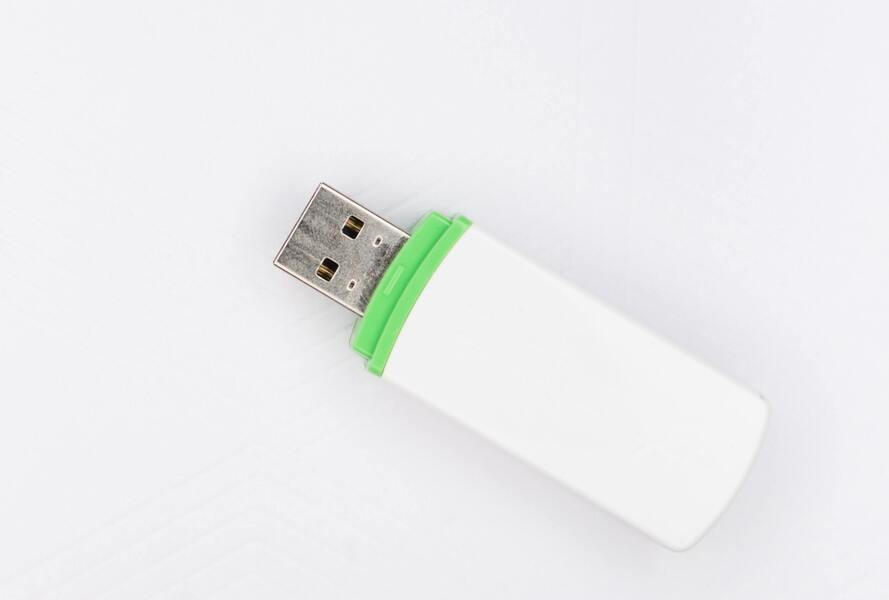
How can you tell if a USB stick is corrupted?
A corrupted USB stick usually shows some telltale symptoms. Have any of these happened to you?
- You plug the USB stick into a USB port, but the computer doesn’t recognize it;
- You try to open a folder or file on the USB stick, but the computer hangs and can’t open it;
- You open a file from the USB stick to edit it, and the program crashes.
If so, something is wrong with your USB stick. But what causes it? There are several reasons why a USB stick can become corrupted.
First, think about its physical build. The device is small and light and, despite its protective casing, fragile. A drop or a hard knock can damage its components and leave the files inaccessible.
USB sticks can also suffer electronic faults. Unlike old floppy disks, which stored data magnetically, they store it in flash memory chips managed by a controller on a small circuit board.
One of the most common problems is pulling the stick out of the port while it’s still in use. Operating systems recommend ejecting the device before unplugging it, because removing it in the middle of a write can corrupt the file system or the controller’s internal data and leave the stick unreadable.
Water, humidity and heat can also damage the electronic components.
USB sticks tolerate a fairly wide temperature range, but overheating can damage them. This can happen when they are left in the sun, but also under heavy, sustained use, such as copying very large files or editing images directly on the stick.
Another common problem is malware. Because USB sticks are so easy to carry around, they end up plugged into lots of different computers — at school, at work, in internet cafés — which makes them more exposed to viruses.
That’s why you should always keep your antivirus active and only plug your USB stick into computers you trust.
How do I fix a corrupted USB stick?
So, what should you do if your USB stick is corrupted? There are a few things you can try to get the device working again and regain access to your files.
We’ll share some tips, but be careful: the methods below write to the USB stick and, if the files are important, they can make recovery harder or impossible. If you can’t afford to lose the data, get expert help first.
Here are some ways to fix a corrupted USB stick:
Using Error Checking
The Windows Error Checking tool can find and fix file system errors that stop you from accessing files on the USB stick. To use it, connect the stick to your computer and follow these steps:
- Open File Explorer and click This PC;
- Under Devices and drives, find the drive that corresponds to your USB stick;
- Right-click it and open Properties;
- Go to the Tools tab and, under Error checking, click Check;
- Click Scan and repair drive.
Windows will then scan the drive and fix any file system errors it finds.
This doesn’t always work, though, and it changes the data on the stick, so if the files matter it’s safer to recover them before trying any repair.
Using Disk Management
You can also try to fix the problem in Windows Disk Management. Here’s how:
- Right-click the Start button and open Computer Management;
- Click Disk Management and find your USB stick;
- Right-click it and select “Change Drive Letter and Paths”;
- In the new window, click Add (or Change) and assign a drive letter.
This can make your USB stick show up in Windows again if the problem was simply a missing drive letter. It won’t fix a burnt-out circuit board or other hardware faults, which require physical work on the device.
Using CHKDSK
CHKDSK is a Windows command that checks and repairs the file system and, with the /r option, looks for bad sectors. It does the same job as Error Checking, but with more options. Like Error Checking, it writes to the drive, so only use it if your files are backed up or you don’t need them. To use it:
- Open the Command Prompt as administrator (type “cmd” in the search box, right-click Command Prompt and choose Run as administrator);
- Type “chkdsk X: /f /r”, replacing X with your USB stick’s drive letter and without the quotes (for example: chkdsk D: /f /r), and press Enter.
This command checks and repairs the drive’s file system. If Windows reports that it has fixed the errors, the USB stick should work again.
But be careful with these commands: if the stick is failing, a repair can delete or overwrite data and make it unrecoverable.
Reinstall the drivers
Another option is to reinstall the USB stick’s driver. If it is corrupted, Windows may not detect the device. Follow these steps:
- Right-click the Start button and open Device Manager;
- Under Disk drives, right-click your USB stick;
- Click Uninstall device and confirm.
- Unplug the USB stick and restart the computer.
Then plug the USB stick back in: Windows will reinstall the driver and will probably recognize it. This step doesn’t touch the data on the stick.
Format (this erases your data)
When a USB stick is corrupted, Windows often displays a message asking you to format it. Don’t accept it if you still need the files: formatting the USB stick erases all the data on it.
To format, simply right-click the USB stick in File Explorer and select Format.
Formatting “wipes” the device, errors and all, so you can use it again — but your files go with it. The right order is to recover the files first and only then format. If you can’t access them, read on to see how to recover lost files from a USB stick.
How do I recover corrupted files from a USB stick?
If the steps above haven’t worked, you need another way to get your files back. And if you’re going to format the stick, recover the files first.
To do this, you can use data recovery software such as EaseUS Data Recovery Wizard or Wondershare Recoverit.
These programs can help when Windows still detects the USB stick but can’t open the files. They don’t repair the stick: they read it and copy the files they find to another drive. Always save the recovered files to a different disk, never to the USB stick itself. Once the files are safe, you can format the device.
Data recovery programs try to rebuild the file system’s index so the files become accessible again. However, this can take time and doesn’t always recover everything, so be patient and careful.
To be on the safe side, we recommend contacting a specialist company — especially if the stick isn’t detected properly, has been dropped or got wet.
Data recovery is complex work involving important data that can’t be lost. With USB sticks, it’s often necessary to open the device and work directly on the circuit board or read the memory chips with specialist equipment.
Only trained professionals with the right equipment can do this safely, which gives you the best chance of getting your files back.
Read next
How Bot can help
Bot is a leader in data recovery in Portugal. With over 11 years’ experience in the market, we can help you recover files from your corrupted USB stick.
We have experienced and qualified professionals who have dealt with the most diverse data loss situations. We work in laboratories with complete sanitization, according to strict standards, and we use state-of-the-art equipment to carry out the procedures.
Therefore, you can count on a specialized company, with total security for your files and the best chances of recovery.
You can contact us at a Bot unit, located in various cities in Portugal, or request a free collection of your device for us to carry out an assessment.
Now, fill in this form and start recovering data from your USB stick!


