


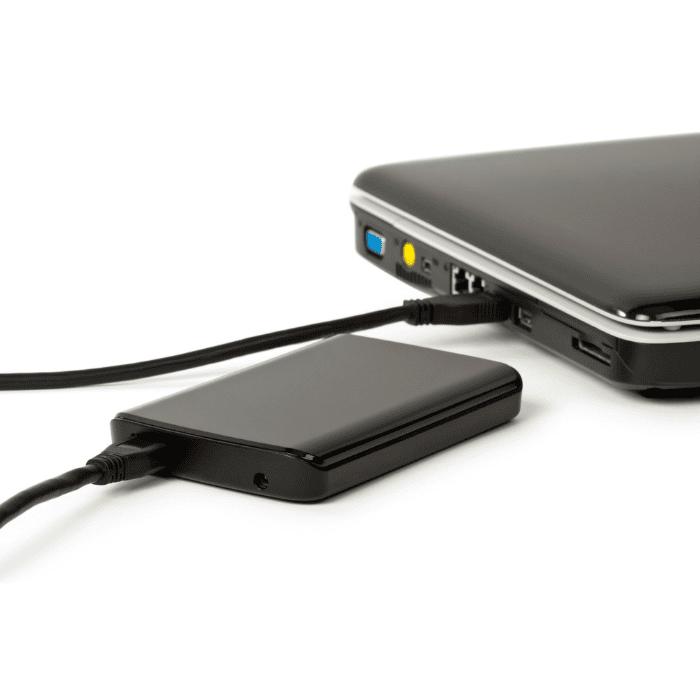
Even when a Seagate external disk can’t be repaired, your data can often still be recovered
How do you recover a Seagate external disk? If you’re asking this question, your drive has probably developed a problem and you want to fix it as quickly as possible so you don’t lose access to everything stored on it.
If your external drive from this brand has failed and the files matter, see Bot’s external hard drive recovery, done in our own lab.
This is a fairly common situation — not because Seagate drives are poor quality, but because Seagate sells an enormous number of them, as figures from Statista show.
According to Statista, between July 2017 and June 2018 Seagate accounted for 20.9% of the drives sold worldwide, second only to Western Digital (38.6%).
Between July 2018 and June 2019, Seagate was third, with 15.7% of all drives sold worldwide, behind Samsung (33.6%) and Western Digital (24.6%).
So needing to recover data from a damaged Seagate disk can happen at any time — and the same goes for every other brand — whether because of an internal fault or because the external disk was dropped, got wet or was formatted by mistake.
Fortunately, there is usually a way out. Read on to find out what you can do to repair a Seagate external disk or recover your data, plus some tips to stop it from happening again.
Why can you lose data from a Seagate external disk?
Several things can lead to data loss on a Seagate external disk, including:
- Formatting the disk: whether the format was planned or accidental, it’s common to realize afterward that you still need one or more files that were on it.
- Human error: another very common cause. We all make mistakes, from accidentally deleting a single file to wiping a disk full of important data to make room for games, movies or photos.
- Power failures: external disks can suffer the same problems as internal ones, although it’s less likely. A power cut or surge can damage the drive or corrupt data that was being written.
- Liquid spills: whether it’s a milkshake or a bottle of water, liquids often end up on external disks — on the desk or inside a backpack or bag.
- Cyberattacks: when an external disk is connected to a computer or mobile device, it can be accessed just like an internal drive, so an attack on that device (ransomware, for example) can reach the data on the external disk too.
- Viruses and malware: even with a good antivirus, unknown attachments and suspicious websites can carry viruses and malware capable of damaging the data on your external disk.
- Loss and theft: last but not least, because it’s portable, an external disk is more likely to be lost or stolen.
Can my Seagate external disk be recovered?
Despite all the ways data can be lost, the good news is that recovery is usually possible, and in most cases the results are very good.
At Bot, we have a 96% success rate across the cases we receive. That gives you more peace of mind, knowing your external disk is in the hands of highly qualified, experienced specialists.
How do I recover my Seagate external disk?
There’s no single answer. Think of it like repairing a car: everything depends on what was damaged and how it happened.
Recovering a damaged Seagate disk starts with a careful technical assessment of both the electronics and the mechanics, to find out which components have failed and choose the best approach.
When the drive is physically healthy and the problem is logical — deleted files, formatting or a corrupted file system — data recovery software can often bring back deleted folders and files, which is real light at the end of the tunnel. When there is a hardware fault, software alone won’t solve it.
But be careful: data recovery software should only be used by people who know what they’re doing. Otherwise, the data may not be recovered, and you may even make the professionals’ work harder later on.
So it is possible to recover a Seagate disk that your computer doesn’t recognize or that has some other problem, but it’s best to leave it to people who really understand the subject, like Bot.
Can CHKDSK fix a Seagate external disk?
Windows includes a tool, CHKDSK, that can repair file system errors on a Seagate external drive (or any other brand) without installing any extra software.
It’s only an option when the computer recognizes the disk, the disk works normally (no unusual noises, freezing or extreme slowness) and the problem is a corrupted file system. CHKDSK doesn’t recover data: it repairs the file system structures and may delete or move damaged entries, which can make later recovery harder. If the data matters, copy everything you can to another drive first, or have a professional recover it before you run any repair.
A word of warning: only go ahead if you have some experience with data recovery and your important files are already backed up. We cannot be held responsible for any damage to the device or the data on it.
The process is simple:
- Open the Start menu by clicking the Windows icon, usually in the bottom-left corner, or by pressing the Windows key on your keyboard.
- Type cmd, right-click Command Prompt and choose Run as administrator. The Command Prompt window will open.
- Type
chkdsk G: /f(replacingG:with the drive letter of your external disk) and press Enter. - CHKDSK will check the disk and fix any file system errors it finds.
When it finishes, check whether the files open. If they do, the problem should be solved; if not, stop using the disk and contact a specialized company such as Bot.
How to prevent data loss on a Seagate external disk
As the saying goes, prevention is better than cure. A few simple habits go a long way toward keeping your data from being lost or damaged.
To make things easier, we’ve split the tips into two groups: software and hardware and environment.
Software and hardware
- Keep more than one backup if you can. Besides external disks, you can use USB flash drives, cloud storage or even a printed copy of an important document. The more places you can recover from, the better.
- Back up to the cloud. The cloud deserves a special mention: it keeps your files in a safe place where you can access them anytime, and there are plenty of affordable services to choose from, such as Google Drive, Dropbox and OneDrive.
- Remember that external disks are sensitive devices. Even though they’re made to be carried around, avoid knocks and drops, which can cause damage, especially to the mechanical parts.
Environment
- Store the external disk in a safe place after use. An office drawer, a closet or anywhere else protected from humidity and impacts will do.
- If you don’t need the external disk, don’t take it with you. It’s convenient to carry, but if you’re not going to use it, leave it at home, at the office or somewhere else safe.
- Be very careful with liquids near the external disk. A little water is enough to damage its electronics. Keep it away from any source of liquid or moisture, from juice bottles to open windows on rainy days.
How to recover a damaged Seagate disk and get your data back
It isn’t always possible to reuse a faulty drive, but in most cases the data on a Seagate external disk can be recovered. And even if the drive itself has to be thrown away, your data is usually worth far more than the disk.
That’s where Bot comes in. We specialize in external drive recovery, with more than 200,000 cases and reception points in Lisbon, Coimbra, Porto and Braga, and our specialists open drives only in a Class 100 (ISO 5) cleanroom, which protects the platters and heads during the work.
Don’t wait to recover your Seagate external disk: start your data recovery and get your data back affordably, conveniently and safely.


