


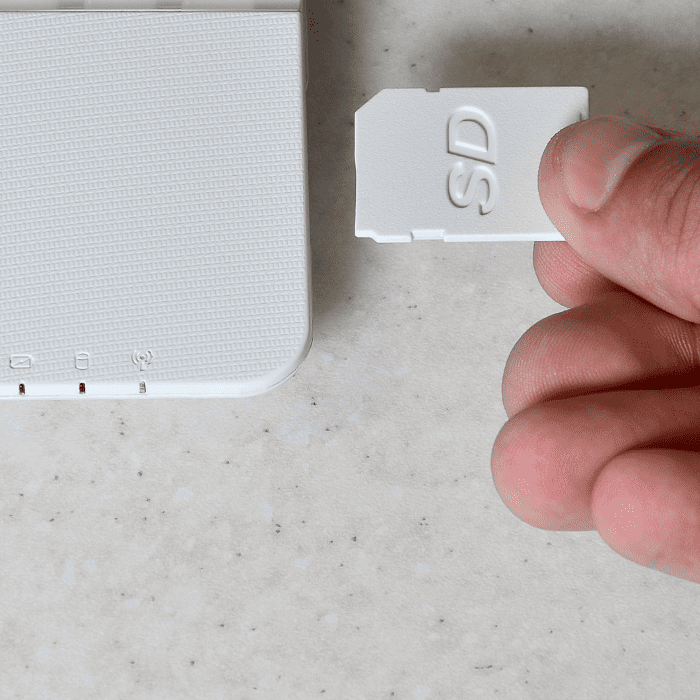
SD cards have made everyday life much easier. These small devices can store large amounts of data, such as photos, videos and documents, making it easy to carry and transfer information.
After a format, the files can often still be recovered as long as nothing new is written. If they matter, see Bot’s memory card recovery, which starts with a free diagnosis.
However, despite all their advantages, it is all too common to lose valuable data by formatting a card by mistake.
But don’t worry: in this article, you will learn how to recover a formatted SD card and what the most common causes of data loss on these devices are.
What does formatting an SD card mean?
Formatting an SD card removes all the files from the card and rebuilds its file system structure. The card appears empty and ready to receive new files.
Formatting is a common way to clean up a card or fix file system corruption.
The files then disappear from view and, once the space is reused or a full format is performed, they can be lost for good, so act quickly and use the right methods if you need to get them back.
Is it possible to recover photos from a formatted card?
The good news is that in most cases it is possible to recover photos and other files from a formatted SD card.
This is because a quick format usually doesn’t erase the data itself: it only hides the files and marks their space as available for new data. Until that space is overwritten, the files are still on the card.
That’s why lost data can often be recovered with the right tools and methods, as long as you stop using the card and don’t save anything else to it.
How to recover a formatted SD card
Here are two safe ways to approach a formatted SD card:
Method 1: use data recovery software
- Open the data recovery software of your choice (for example, EaseUS Data Recovery Wizard) and select the formatted SD card
- Click “Scan” to start searching for files
- Wait for the scan to finish. This can take from a few minutes to a few hours, depending on the size of the card and the amount of data
- When the scan is complete, select the files you want to recover from the list
- Save the recovered files to a different drive, never to the SD card itself, to avoid overwriting data.
Method 2: check the card with Diskpart (without writing to it)
- Connect the SD card to the computer and open the Command Prompt as administrator
- Type
diskpartand press “Enter” - Type
list diskto see the available disks and identify the SD card by its size - Make a note of the card’s disk number. If the card doesn’t appear, or shows 0 bytes or the wrong capacity, the problem is likely physical (controller or memory) and no software will help: stop and contact a data recovery lab
- Type
select disk X(replace “X” with the SD card’s disk number) and press “Enter” - Type
detail diskto see the volumes on the card, thenexit. Do not typeclean: it does not undo formatting, it deletes the partition table and makes recovery harder - Likewise, don’t run
create partition primaryor any format command at this stage: they write to the card and can overwrite the files you want to recover. - If the card is detected correctly, go back to Method 1. Only format the card again (
format fs=fat32 quickfor cards up to 32 GB, orformat fs=exfat quickfor larger ones) once all your files are safely stored elsewhere.
What are the common causes of data loss on storage devices?
In general, the most common causes of data loss on storage devices are accidental formatting or deletion, virus attacks and the habit of deleting files without thinking to free up space on the SD card.
Let’s take a closer look at each of them:
Formatting
As mentioned above, formatting by mistake (or even on purpose without a backup) is one of the main causes of data loss on SD cards and other storage devices.
Deletion
Accidentally deleting important files is another common cause of data loss on SD cards. It is usually due to human error or system failures.
Another frequent cause is the hasty habit of deleting files and documents from the card to free up space without checking whether they have been backed up.
Virus attacks
Viruses can also corrupt data, make it inaccessible or even delete it completely.
Tips for preventing data loss
Data loss can happen suddenly, but some good habits help prevent it: making regular backups, being very careful when formatting and removing the card properly.
It is also a good idea to keep the SD card protected (from both malware and physical damage) and to use reliable antivirus software.
Here are these precautions in more detail:
Make regular backups
Keeping backup copies of your files on other devices or in the cloud is essential. That way, even if something goes wrong with your SD card, you will still have a safe copy of your data.
Be careful when formatting
Before formatting your SD card, back up your important files. Also, avoid formatting the wrong device by double-checking that you have selected the right SD card.
Don’t remove the SD card abruptly
Always remove the SD card properly, using the “Eject” or “Safely Remove Hardware” option on the computer or device.
This makes sure that all data has been written before the card is disconnected, preventing the files on it from becoming corrupted.
Keep the SD card protected
Avoid exposing it to extreme temperatures, humidity, dust and dirt.
When you’re not using the SD card, keep it in a box or case.
Use good antivirus software
To prevent data loss due to viruses, protect your computer and devices with reliable antivirus software and keep it up to date.
Couldn’t recover your files or don’t want to put your data at risk? Recover your formatted SD card with Bot
Losing data by formatting an SD card can be distressing, but fortunately there are ways to recover those valuable files.
In this article, we have stressed the importance of prevention and shown simple measures you can take to avoid data loss in the future.
We have also covered two methods for dealing with a formatted SD card: using recovery software and checking the card with Diskpart without writing to it (the popular “clean” trick does not undo formatting and can destroy your data).
Even so, any do-it-yourself attempt carries some risk. So, if you have lost data and want to recover your formatted SD card, the safest option is to seek professional help.
At Bot, for example, we understand how urgent it is to recover data from your SD card.
That’s why we work as quickly as possible, delivering your diagnosis and quote within 48, 24 or 12 hours, depending on how urgent your case is. The standard diagnosis is free.
For your convenience, we also offer free collection of your device (islands not included).
Our team of highly qualified professionals works on your device in a particle-controlled environment, keeping it safe throughout the process.
That is why so many customers trust us with their data: more than 200,000 cases and a 96% success rate.
Trust specialists with more than two decades of experience: start recovering your SD card with us now!


