


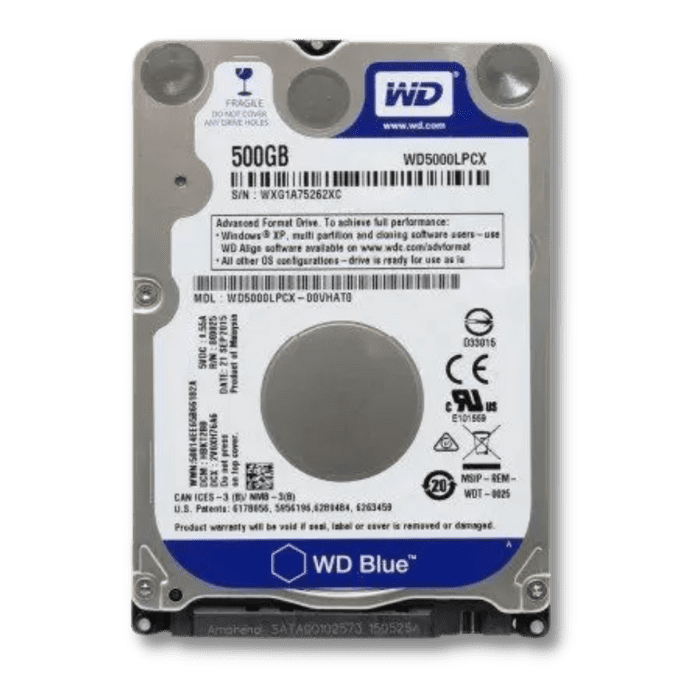
Western Digital, often known simply as WD, is one of the world’s leading hard drive manufacturers. In early 2021, the US company accounted for 36% of the global hard drive market, and it is known for the quality of its products. But even excellent drives can run into problems. That’s why, in this article, we explain how to recover data from a Western Digital drive.
If your hard drive from this brand has failed and the files matter, see Bot’s hard drive and external drive recovery, done in our own lab.
You’ll learn more about the brand, discover the most common faults in its drives and see what to do to get your lost data back. Read on!
What does Western Digital do?
Western Digital Corporation was founded in California in 1970. At first, the company focused on making integrated circuits. It entered the hard drive market in 1988, when it bought Tandon’s disk drive division, and has since become one of the world’s leading storage brands.
Today, Western Digital makes hard drives and SSDs, both internal and external. In the first quarter of 2021, WD was the world’s second-largest hard drive supplier, with 36% of the market, behind its main competitor Seagate, with 43%, according to Statista.
Why can data on a hard drive be lost?
Western Digital drives are good-quality devices, but, like any other drive, they can still fail. Some of the most common hard drive problems include:
Mechanical damage
Have you dropped your laptop or knocked your computer hard? That can damage the drive. Because hard drives have moving mechanical parts, any impact can damage the components that read and write data, leaving the drive unreadable or making the data hard to access.
Virus and malware contamination
Your data can also be compromised by hacker attacks and virus infections. In these cases, your computer may stop recognizing the drive, or some files may appear corrupted.
Liquid spillage
Spilling water, coffee or juice on your computer or external drive is another common cause of problems. The liquid can damage the drive’s electronic circuits and put the stored data at risk. If this happens, unplug the device straight away and don’t try to power it on again.
Power outage
Every time the computer shuts down abruptly, the drive is at risk. Whether it’s caused by a power outage or by switching the computer off the wrong way, it can affect the health of the drive. The file system can become corrupted, and the drive may no longer be detected by the system.
The most common faults in Western Digital drives
Besides the general failures mentioned above, there are two faults that are particularly common in Western Digital drives. This doesn’t mean they only happen with WD drives, just that they are frequent in these models. Here’s what each one involves.
Faulty preamplifier
The preamplifier is a chip on the head assembly, inside the drive, that amplifies the signal from the heads that read and write data. It is sensitive to electrostatic discharge, which can damage it, and power surges or fluctuations can also make it fail.
This fault was more common in older drives, but it still happens in some Western Digital models.
Spindle motor problems
The spindle motor spins the platters, and the heads read and write data on them as they turn. So, when the motor fails, the whole drive stops working properly. In these cases, the drive may make unusual noises or fail to spin up — if you notice this, switch it off.
Can data be recovered from a Western Digital drive?
Have you had one of the problems above and are worried about your hard drive? As with most brands, data can often be recovered from a Western Digital drive, but it depends on the type of fault. Only a proper diagnosis can tell what is wrong and whether recovery is technically feasible. If the drive is not making unusual noises and is detected normally, there is a simple check you can try first.
If you use Windows, follow these steps:
1 – Open the Start menu.
2 – Type “cmd”, right-click “Command Prompt” and choose “Run as administrator”.
3 – In the Command Prompt, type chkdsk G: /f (replacing “G” with the letter of the drive you want to check) and press Enter.
CHKDSK will check the file system and try to fix any errors it finds. Bear in mind that it writes to the drive while repairing it, so it is not risk-free: if the files are important, or if the drive is clicking, very slow or showing read errors, don’t run it. If the drive still doesn’t work, the best option is to go to a specialist company.
There are several data recovery programs available, such as Recoverit, EaseUS Data Recovery and DiskGenius, among others. However, we don’t recommend them for anyone without experience. Trying to recover data from a Western Digital drive without knowing what you’re doing can cause further damage to the device and lead to the permanent loss of your files.
Also, never open your hard drive. Opening it outside a cleanroom lets dust onto the platters, which can cause serious physical damage and put your data at even greater risk.
How do I recover data from a Western Digital drive?
So, how do you recover data from a Western Digital drive? If you’ve tried other options without success, we at Bot can help, with more than two decades of experience, more than 200,000 cases and a 96% success rate.
With us, the standard diagnosis is free, and you can choose how quickly you get it: standard (up to 48 hours), priority (up to 24 hours) or urgent (up to 12 hours).
Free collection
After filling in the form, we collect your drive for analysis free of charge (islands not included).
Handled in our own laboratories
The entire service is carried out in our own laboratories, with maximum security for your device and your data.
How much does it cost to recover data from a Western Digital drive?
Finally, many people want to know how much it costs to recover data from a Western Digital drive. The answer depends on the extent and complexity of the problem. The diagnosis and quote take into account the drive’s construction, the damage found, the chances of recovery and the work involved.
This means that prices vary a great deal; you can find more information on our pricing page. One advantage of Bot is that you don’t pay for shipping: collection is free, so your device can be analyzed and you can then decide whether or not to go ahead. You can also pay in 3 interest-free installments, and you pay in full, or most of it, only after checking your recovered data.
Read next
Conclusion
Need to recover data from a Western Digital drive? At Bot, we have extensive experience with all the main hard drive brands on the market. If your problem persists, get in touch and get a quote.


