


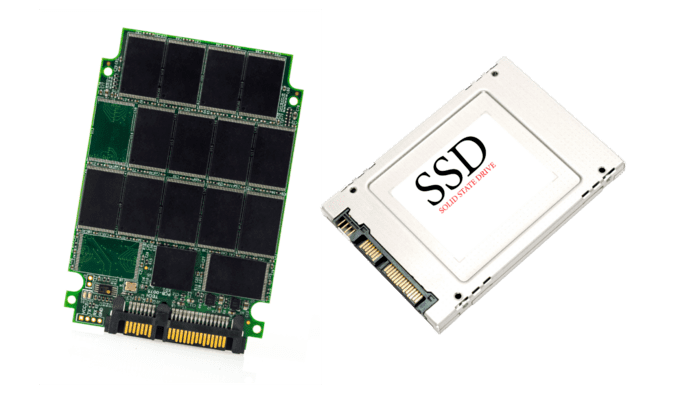
What is the best SSD on the market, which brands offer the best value for money, and how do you choose one? If you want better performance from your computer, adding an SSD is one of the upgrades that makes the biggest difference. SSD technology has come to stand out against the traditional hard drive thanks to its high speed, resistance to shocks and low power consumption.
And if your SSD ever fails with important files on it, Bot’s SSD data recovery starts with a free diagnosis.
If you are not familiar with the term, SSD stands for “Solid State Drive”. The essential difference is that it is electronic rather than mechanical: unlike a hard drive, it has no spinning platters. Even if you have never used one, you have probably heard how much faster a computer starts up with an SSD, which is a big difference compared with a hard drive.
What is the difference between an SSD and a hard drive?
An SSD differs from a hard drive mainly in the way it stores and transfers data, and its transfer speeds can be many times faster. We have already explained the differences between hard drives and SSDs here on our blog, and the right choice varies from person to person. Even though an SSD is faster, that does not make it better than a hard drive in every respect, and the same is true the other way around.
Knowing how each one works is important to choose the right device for your computer, so we have published a complete article on the differences and advantages of each. Read more about the difference between an SSD and a hard drive.
Why choose an SSD?
There are several ways to store data today, so you may be wondering why you should choose an SSD. Start by looking at your needs and at what your computer supports. If you want faster writes and reads, less noise, better resistance to drops and shocks, and lower power consumption, there are plenty of reasons to buy an SSD.
Once you have decided that your computer needs an SSD, you need to look at a few important points to choose the right one, such as capacity, durability, motherboard interface, performance, brand and model. And if you don’t know which brand offers the best value for money, read this article to the end: we list five well-known SSD models from different brands.
How to choose the best SSD
Nobody wants to buy hardware that doesn’t fit, right? To choose a good SSD, you need to make sure it is compatible with your computer, so assess the main features of each model. Always check the points below:
Motherboard connection
The first step in choosing an SSD is to check which connections your computer’s motherboard has. Many 2.5-inch SSDs connect through a SATA port. Pay attention to the generation of that port, because an older port will limit the speed of the SSD and you will not get the performance you paid for.
For example, SATA II ports run at a maximum of 3 Gb/s and can limit the drive’s speed. We recommend using SATA III ports, which run at 6 Gb/s.
Other models use the M.2 format, which is smaller and plugs directly into a slot on the motherboard. Even so, you need to check which standard your computer and the SSD use, since an M.2 slot can support SATA, NVMe or both.
Capacity
This depends on your needs and budget: the larger the SSD’s capacity, the more space you have to install programs and store files. However, more capacity also means a higher price, and capacities range from a few hundred gigabytes to several terabytes.
Durability
Most SSDs have a long lifespan, but it is always worth checking the experience of other users who have bought the same model. An SSD’s life is limited by the amount of data written to it. Manufacturers state this endurance in TBW (terabytes written) and back it with a warranty period, often 5 years; with normal use, an SSD usually lasts for many years.
Performance
Manufacturers publish the read and write speeds each SSD can reach, so look for the highest figures if you want more speed. Two types of speed affect performance: sequential and random. Watching independent tests online to see whether the model you are considering really delivers what it promises will give you more confidence in your choice.
Size
The most common size for a SATA SSD is the 2.5-inch format, but it varies from model to model; M.2 drives, for example, come in lengths such as 2280. Make sure the SSD’s format fits the bay or slot in your desktop or laptop.
Internal or external
Whether to choose an internal or an external SSD depends on what you need right now. An internal SSD is built into the system and, besides storing data, improves your computer’s performance; an external SSD is a portable option for carrying files with fast reads and writes.
Brand
To choose the best SSD brand, pay attention to the warranty, technical support, product quality and other users’ reviews. Some models from well-known brands do not perform as well as expected.
NVMe models
NVMe models use a more advanced protocol over the PCIe bus, which lets them reach much higher speeds: PCIe 4.0 drives exceed 7,000 MB/s and PCIe 5.0 drives get close to 15,000 MB/s, many times faster than SATA SSDs, which top out at around 550 MB/s. If you want one of these, check that your laptop or motherboard supports NVMe and which PCIe generation its slot uses: a PCIe 5.0 SSD works in a PCIe 4.0 slot, but only at PCIe 4.0 speed.
What is the best SSD?
The answer depends on each person, which is why we went through the characteristics to consider when buying an SSD: there are many brands and models. For this article, we selected 5 great models from different brands, in a list updated in November 2026. See the list below:
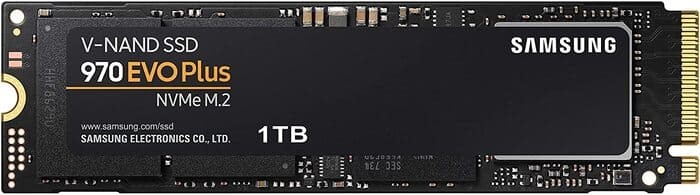
1. Samsung 9100 PRO
The Samsung 9100 PRO is a high-end PCIe 5.0 SSD rated at up to 14,800 MB/s sequential read and 13,400 MB/s sequential write. It is aimed at people with a PCIe 5.0 motherboard, found on recent platforms, who work with heavy files such as 4K/8K video, games and editing projects. It also works in a PCIe 4.0 slot, but at PCIe 4.0 speed.
- Capacity: 1 TB to 8 TB
- Interface: PCIe 5.0 x4 NVMe, M.2 2280
- Warranty: 5 years
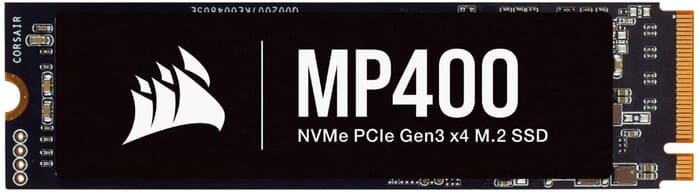
2. WD_BLACK SN850X
The WD_BLACK SN850X, a line now owned by SanDisk, is a fast PCIe 4.0 SSD that is very popular with gamers, with read speeds of up to 7,300 MB/s. The heatsink version is also compatible with the PS5. It comes in capacities from 1 TB to 8 TB.
- Capacity: 1 TB to 8 TB
- Interface: PCIe 4.0 x4 NVMe, M.2 2280
- Warranty: 5 years
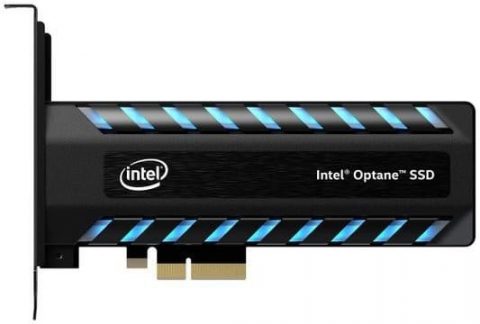
3. Corsair MP600 ELITE
The Corsair MP600 ELITE uses a PCIe 4.0 x4 NVMe interface and reaches up to 7,000 MB/s read. There is a heatsink version designed with the PS5 in mind, and capacities range from 1 TB to 4 TB. It is a solid choice if you want high performance for gaming and everyday use.
- Capacity: 1 TB to 4 TB
- Interface: PCIe 4.0 x4 NVMe, M.2 2280
- Warranty: 5 years
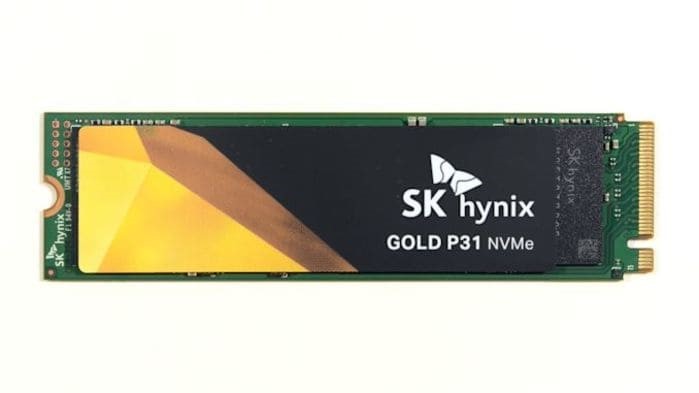
4. Kingston NV3
The Kingston NV3 is the best-value pick on this list: PCIe 4.0 x4 NVMe, up to 6,000 MB/s read and 5,000 MB/s write, in capacities from 500 GB to 4 TB. It also comes in the M.2 2230 form factor used in thin laptops and handheld consoles. Because it has no DRAM of its own, it is great for everyday use but less suited to long, heavy write workloads.
-
- Capacity: 500 GB to 4 TB
- Interface: PCIe 4.0 x4 NVMe, M.2 2280 or 2230
- Warranty: 3 years

5. Silicon Power A55
The Silicon Power A55 is a 2.5-inch SATA III SSD (also available as an M.2 SATA drive), with up to 560 MB/s read and 530 MB/s write. It is the option for giving new life to an older desktop or laptop that only has a SATA connection: it is not as fast as NVMe models, but the difference compared with a hard drive is very noticeable. It comes in capacities from 128 GB to 2 TB.
- Capacity: 128 GB to 2 TB
- Interface: SATA III (6 Gb/s), 2.5-inch or M.2
- Warranty: 3 years
Read next
Conclusion
Choosing an SSD is not difficult: if you consider all the points in this article, you will know enough to pick the right drive for your desktop or laptop. Essentially, check that the connection is compatible and work out the capacity and speed you need.
There are many SSDs on the market, and we have listed a few with different interfaces to help you decide. If you are looking for a new SSD because yours has failed and your files have been lost or deleted, Bot, the best-rated multinational in data recovery, with more than 200,000 cases and a 96% success rate, can help.
Would you like a free diagnosis? Fill in our form to get started. We can collect your device from your address free of charge (islands not included), or you can drop it off in person at one of our offices.


